
You’ve got a load to move.
You send it out to a handful of brokers — maybe five, maybe ten, maybe more. The idea is simple: create competition, get the best price, and move the freight.
That’s how freight bidding is supposed to work.
But in practice, it often does the opposite.
Instead of lowering your freight rates, sending a load to multiple brokers can actually drive your freight pricing up — sometimes without you ever realizing it.
What Freight Bidding Looks Like on Paper
From a shipper’s perspective, freight bidding makes sense.
You send the same load to multiple providers, and each one competes to find a truck. In theory, that competition should push pricing down.
And in some situations, it does.
But that assumes each broker is operating in isolation.
They’re not.
What’s Actually Happening Behind the Scenes
When multiple brokers receive the same load, they all go to the same place:
trucking load boards.
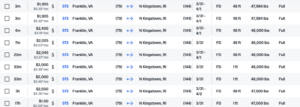
Without getting into the specifics, most brokers are working off the same few platforms in the trucking load boards ecosystem. That means your single load is now being posted multiple times — often at slightly different rates — by multiple brokers, all trying to get a driver’s attention.
From there, a different kind of competition starts.
Not between brokers and pricing…
…but between brokers and trucks.
The Driver’s Perspective
Now look at the same situation from the driver’s side.
They open the board and see the same load posted multiple times.
Different names. Different phone numbers. Slightly different rates.
What does that signal?
Competition.
And when drivers see competition, they don’t rush to take the first offer.
They wait.
They watch.
And as brokers start adjusting their freight pricing to get a call, the driver simply takes the highest-paying option.
How Freight Rates Get Driven Up
This is where things shift.
At first, the load sits.
No calls. No coverage.
So one broker bumps the rate slightly to get attention.
Then another does the same.
Then another.
Within an hour or two, you’ve gone from a single load with one price…
to multiple brokers competing to attract the same truck — each one increasing the rate just enough to stand out.
And here’s the key point:
As soon as one broker raises the rate, the rest follow.
The result?
Your freight rate increases — not because the load changed, but because the process created competition where it didn’t need to exist.
What Looks Like Competition Can Create Inefficiency
From the outside, it still feels like you’re creating leverage.
But internally, something else is happening:
- Multiple brokers are chasing the same truck
- Drivers are choosing the highest offer
- Time is being lost waiting for responses
- Pricing is being pushed upward
And all of that feeds into the same outcome:
higher freight costs, slower coverage, and more noise.
So it’s worth asking:
- How much time is lost managing multiple brokers?
- How consistent are response times across providers?
- How transparent is the information you’re getting back?
- How often are loads delayed because they’re no longer profitable at the original rate?
- And how much of your freight pricing is being influenced by internal competition rather than actual market conditions?
A Different Way to Think About Freight Bidding
This doesn’t mean freight bidding is broken.
It just means the way it’s often executed creates unintended consequences.
Because if multiple brokers create competition for trucks…
then reducing that competition can stabilize pricing.
In practice, that looks like working with fewer providers — or even a single broker — who has the ability to access the capacity you need without broadcasting the load to the entire market.
From DDS’s perspective, the issue isn’t whether you use a freight broker.
It’s how many, and how they’re being used.
Chasing Trucks vs. Controlling the Load
There’s a difference between:
- chasing trucks
and - controlling how a load gets covered
When too many brokers are involved, everyone is chasing the same truck.
When fewer, more capable providers are involved, the process becomes more controlled:
- fewer duplicate postings
- less internal competition
- faster response times
- more consistent communication
And often, more stable freight rates.
What Would You Do?
Let’s look at a simple scenario.
You have a load that needs to move.
You send it to multiple brokers.
It sits for a while. No one has it covered yet.
Rates start creeping up.
More brokers post it. More drivers see it. More competition builds.
Now ask yourself:
What would you do next?
- Keep sending it out wider?
- Wait and hope someone takes it?
- Or tighten control over how that load is being covered?
- Offer more money to get it covered?
Reducing Freight Costs Isn’t Always About Lower Rates
A lot of conversations around freight focus on one thing:
how to reduce freight costs.
But cost isn’t just the number on the load.
It’s also:
- how long it takes to cover
- how many people are involved
- how often things need to be reworked
- how predictable the outcome is
Sometimes, the fastest way to control freight pricing isn’t to push rates lower…
It’s to reduce the variables that cause them to rise.
Looking Ahead
As freight markets shift and load volumes increase, these dynamics become more noticeable.
More freight moving means more pressure on capacity.
And more pressure on capacity makes the bidding process more sensitive to competition.
Which brings us back to the original assumption:
More brokers should lower your cost.
In reality, depending on how it’s managed…
it may be doing the opposite.
The Real Question
This isn’t about whether you should use a freight broker.
And it’s not about whether you should change providers.
It’s about understanding how your current process is affecting your outcomes.
So the real question becomes:
Is your current approach to freight bidding helping you control your freight rates — or quietly driving them up?
And if it’s the latter…
what would you do differently?
If you’re evaluating how your current process is impacting your freight strategy, you can always connect with our team to compare approaches.